
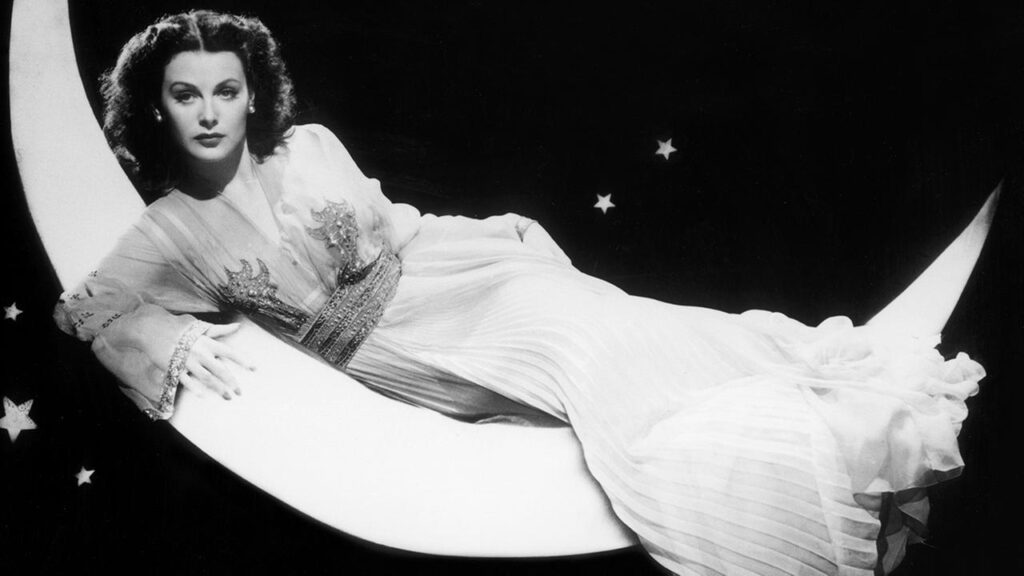
Hedy Lamarr in a promotional session for The Heavenly Body (1944). Image courtesy of Clarence Sinclair Bull / Metro-Goldwyn-Mayer Archive / Public Domain.
Hedy Lamarr remains one of the most enigmatic icons of the twentieth century, a figure whose legacy exists at the precise intersection of cinematic art, breathtaking aesthetics, and avant-garde intellect. Often simplified by mainstream history as either a static Hollywood screen siren or a hidden wartime genius, Lamarr was, fundamentally, a creator. For an art audience, her true mastery lies not just in the roles she performed, but in how she constructed a brand of modern charisma that fundamentally rewired the visual language of glamour.
The Genesis of an Observer
Long before she became the toast of Metro-Goldwyn-Mayer, Hedy was Hedwig Eva Maria Kiesler, born in Vienna in 1914. Her early world was shaped by an environment rich in artistic and intellectual curiosity. Her mother, a concert pianist, introduced her to the emotional depths of music, while her father, a successful bank director, nurtured her analytical eye.
During long walks through Vienna, her father would explain the inner mechanics of printing presses and streetcars. This didn’t just spark a lifelong love for mechanical engineering – it taught her to look beneath the surface of things. She loved the synthesis of form and function, viewing human behavior through that same analytical lens. As a young girl, she would meticulously study and mirror the mannerisms, micro-expressions, and psychological postures of people around her, transforming the act of observation into a fine art.
Acting as an Exercise in Form and Presence
Lamarr’s relationship with the camera was uniquely European, rooted in the avant-garde sensibilities of early 1930s cinema. Her international breakthrough came in Gustav Machatý’s controversial Czech film Ecstasy (1933). While the film was scandalous for its time, it serves as a masterclass in how Lamarr could command a frame. She brought an operating style to Hollywood that relied less on theatrical dialogue and more on sculptural stillness.
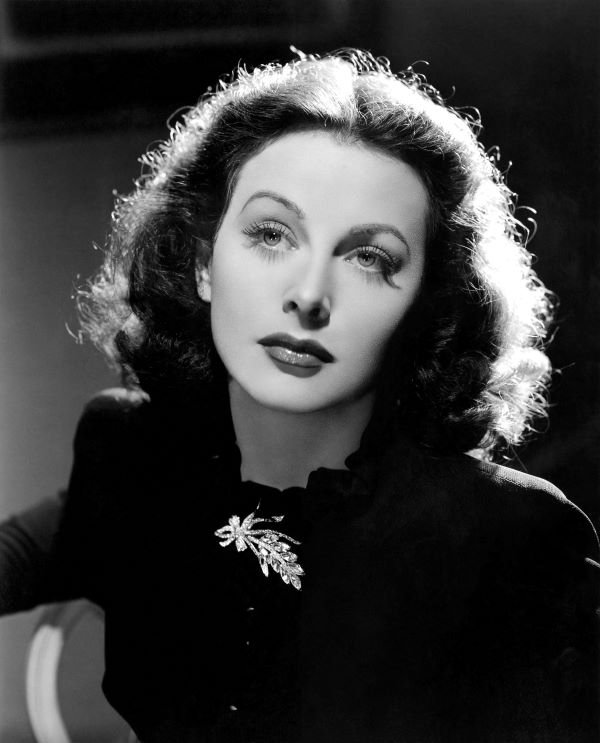
When Louis B. Mayer brought her to Hollywood and renamed her Hedy Lamarr, she was cast opposite the industry’s titans: Charles Boyer in Algiers, Spencer Tracy, and Clark Gable. In motion, Lamarr approached acting with a distinct aesthetic discipline. She understood the canvas of the movie screen. Her performances were marked by a deliberate restraint; she allowed her face to catch the light in ways that conveyed complex internal lives with minimal movement. In masterpieces like Cecil B. DeMille’s Samson and Delilah, her performance is defined by a calculated majesty, proving that her acting was a deliberate orchestration of presence rather than mere typed dialogue.
The Graceful Charisma
To talk about Hedy Lamarr’s beauty is to talk about an artistic masterpiece that defined an era. Hailed universally as “the most beautiful woman in the world,” her charisma was not passive. It was an active, almost mesmerizing power. She possessed a striking, symmetrical visage, characterized by dark hair, porcelain skin, and luminous eyes that broke the mold of the typical blonde, all-American starlets of the 1930s.
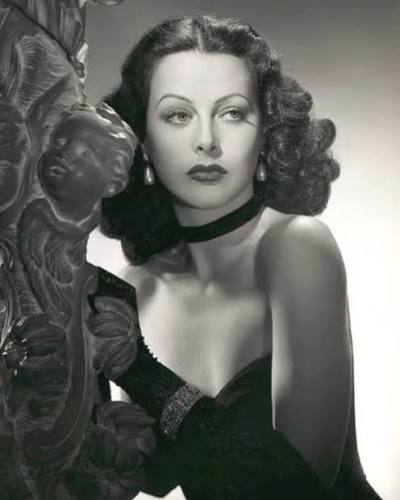
Her allure was exotic, intellectual, and slightly detached—a combination that fascinated and intimidated the public. Her style, from her signature middle part to her preference for dramatic, structured costuming, was widely mirrored. This specific aesthetic mix of severe elegance and deep mystery directly inspired the illustrators of early pop art; she famously served as the visual blueprint for Walt Disney’s Snow White and the original comic book design of Catwoman. Her beauty was, in essence, a living work of art that influenced creators far beyond the silver screen.
The Exquisite Visage: The Fashion and Visual Artistry of Lamarr
To view Hedy Lamarr through an artistic lens is to appreciate her as a masterful designer of her own visual identity. She did not merely wear clothes; she wore structural concepts that dictated how light, shadow, and geometry operated around her. In an era dominated by soft-focus starlets, Lamarr introduced a sharp, high-contrast aesthetic: raven hair parted precisely down the middle, porcelain skin, and deep crimson lips. This stark, graphic presentation became her signature, a living chiaroscuro painting that subverted the conventional Hollywood palette.
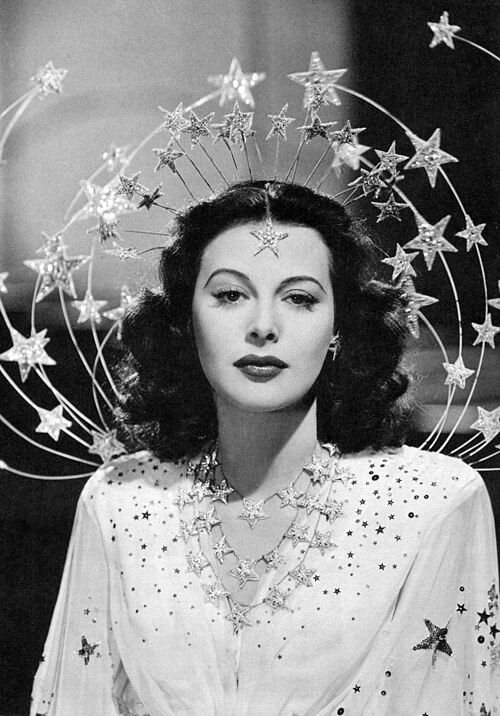
Her collaboration with legendary costume designers like Adrian Greenburg (MGM’s “Adrian”) and Edith Head produced some of cinema’s most striking visual landmarks. In Ziegfeld Girl (1941), Adrian encased her in the iconic “Galaxy of Stars” gown – a translucent, celestial masterpiece topped with a crown of trembling star tendrils that transformed her into an ethereal, neoclassical deity. For Samson and Delilah (1949), Edith Head meticulously constructed the legendary “Peacock Dress,” using a sweeping, iridescent palette that visually mapped her character’s calculated power.
Off the silver screen, Lamarr’s personal style was equally deliberate. She popularized exotic, structured turbans, dramatic forehead jewelry, and tailored, sharp-shouldered suits paired with avant-garde hats tipped precisely at a tilt. Her aesthetic legacy remains so potent that it continues to transcend eras—frequently serving as a structural muse for modern high-fashion houses like Escada.
The Industry as an Audience: Perspectives on Her Presence
While the public consumed her image, those who shared the studio floor or directed the lens understood that Lamarr’s presence possessed a gravity that disrupted the status quo of a scene. Her contemporary peers and collaborators frequently noted that her allure was an almost palpable force.
Director Cecil B. DeMille, who famously demanded absolute grandeur from his actors, openly praised her disciplined majesty. He noted that she possessed a rare, European restraint – an ability to command an entire audience not by shouting her lines, but through a quiet, sculptural dominance of the frame.
“And so I descended, teetering down what felt like millions of steps, in a glorious Adrian costume encrusted with enough twinkling stars to make Neil Armstrong jealous.” – Hedy Lamarr, reflecting on the sheer architectural weight of her cinematic identity
A Lasting Impression on the Cultural Consciousness
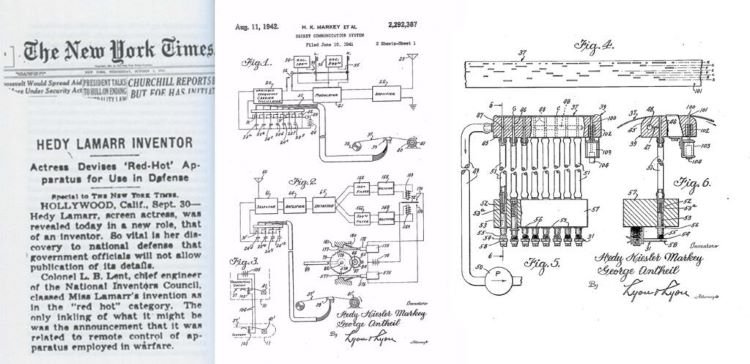
The art world values innovation, and Lamarr’s greatest masterpiece may have been the dual life she successfully engineered. Between takes on film sets, she retired to a trailer equipped with a drafting table to work on conceptual designs. Alongside avant-garde composer George Antheil, she channeled her deep understanding of structural dynamics to co-invent a patented frequency-hopping communication system intended to guide torpedoes for the Allies. Though ignored by the wartime military, this concept ultimately laid the technical foundation for the wireless world we live in today—underpinning Wi-Fi, GPS, and Bluetooth.
Decades after Hollywood sidelined her as her youth evolved, artists, critics, and historians began to see her existence as a profound piece of performance art in its own right. Playwrights have staged her narrative in productions like Frequency Hopping and An American Muse, celebrating her as a symbol of unyielding human creativity. Hedy Lamarr did not merely occupy space in the cultural consciousness; she shaped it. She remains an enduring proof that true allure is a complex blend of aesthetic perfection and intellectual depth.
#HedyLamarr #ClassicHollywood #VintageGlamour #GoldenAgeOfHollywood #OldHollywood #ClassicCinema #VintagePhotography #ClarenceSinclairBull #VintageFashion #ArtHistory #VideosoundArtMagazine